Fire Pit & Outdoor Fireplace Builder in Charleston SC — HOA, Gas Permits & Drainage Done Right
Most fire pits and fireplaces we build sit on a paver patio Charleston SC pad or tie into adjacent hardscape — DCM Outdoor designs them as masonry systems on bases that drain, not rings dropped on bedding sand. We also coordinate with outdoor kitchens in Charleston when cook lines and hearths share one outdoor room. Built-in gas fire pits typically run $4,500–$12,000; custom stone gas builds and large tables can exceed $15,000. Outdoor fireplaces often land $8,000–$35,000+ depending on veneer, chimney height, and utility paths. We coordinate Charleston County permits, gas inspections, and board submissions so you are not chasing signatures alone — start budget checks on fire pit cost in Charleston when you want line-item context.
Fire pits & outdoor fireplaces across Charleston routes
We build fire features across Downtown Charleston, Mount Pleasant, Daniel Island, and West Ashley — with crews regularly working along Highway 17, I-526, and Maybank Highway corridors.
Most installs sit on a paver patio contractor Charleston SC pad or tie into an outdoor kitchen sight line — bundle with DCM Outdoor Charleston when you want one trenching and inspection sequence.
Fire feature projects across Charleston communities
Fuel choice and HOA language change by plan — we document the real community context, not a stock photo ring.
- Mount Pleasant — Dunes West, Park West, Old Village
- Daniel Island — Smythe Park, Center Park
- West Ashley — Avondale, Carolina Bay
- Johns Island — Kiawah River, Whitney Lake
Fire features hub — cost, ideas, locations, comparisons & problems
Charleston pillar page for fire pits and outdoor fireplaces. Branch below for pricing, inspiration, service context, fuel and layout decisions, and common fixes.
Custom Fire Pits & Fireplaces Built for Charleston Yards
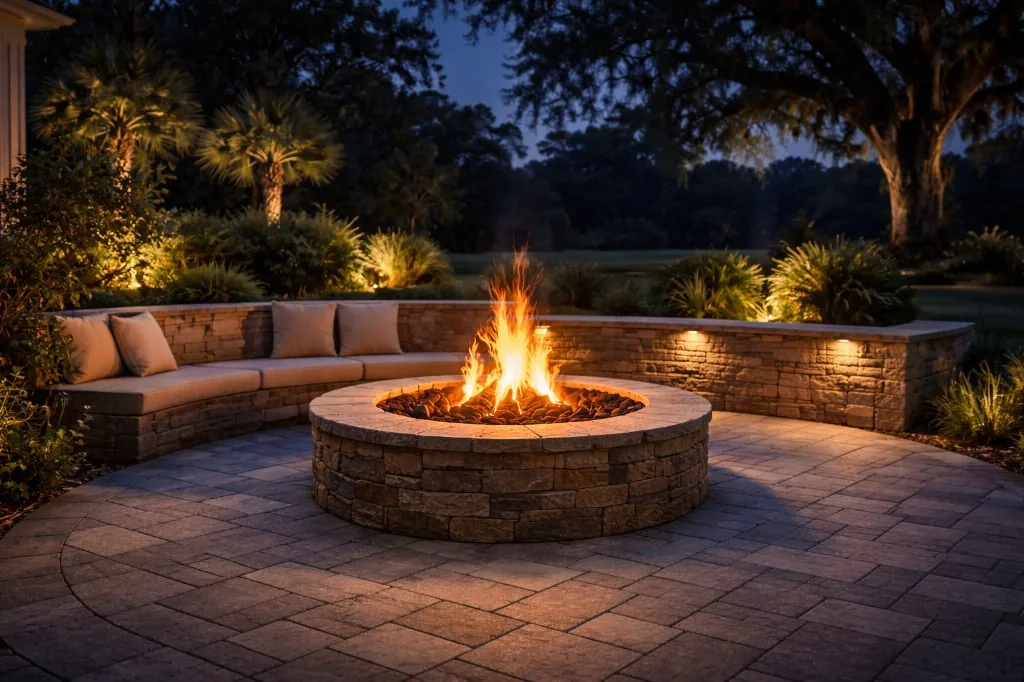
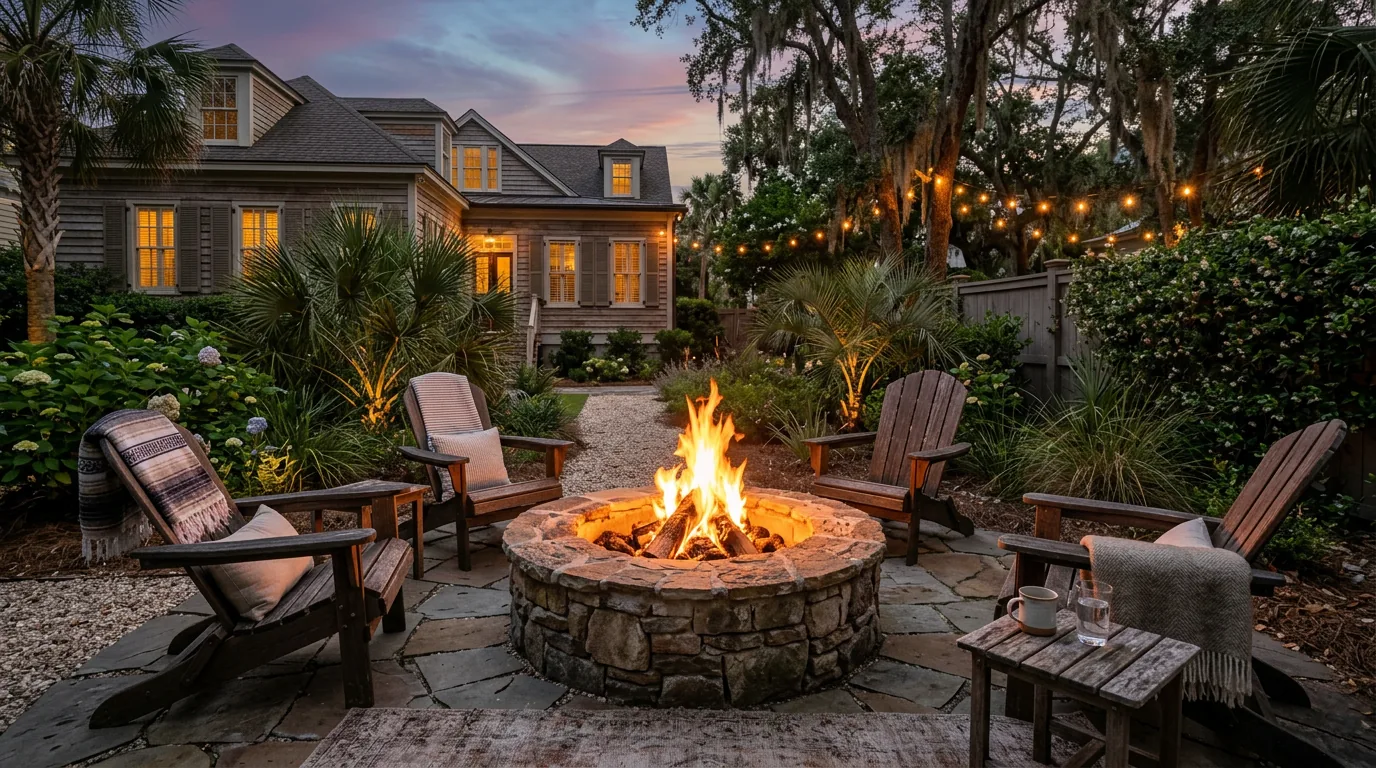
Fire pits and outdoor fireplaces are never just a ring of stones dropped on pavers — not when insurers, HOAs, and gas codes all have something to say. DCM Outdoor designs both as masonry systems with defined fuel paths, non-combustible clearances, and drainage that keeps bases from heaving in clay. Whether you want a linear burner along a seat wall or a full fireplace anchoring an outdoor room, we integrate structure, utilities, and finish materials in one schedule.
We coordinate with your paver patio plane, outdoor kitchen layout, and pergola or cover columns so gas sleeves, vent paths, and seating arcs agree before stone is stacked. That coordination is how you avoid the classic Lowcountry regret: a beautiful pit that smokes into the cook line every time the sea breeze shifts.
Finish palettes range from tumbled coastal limestone to structured granite veneers — always with drainage cavities, weeps where needed, and stainless burners or listed inserts sized to manufacturer tables. If your goal is rental-grade durability on IOP or a quiet Daniel Island conversation pit, the engineering story changes; the discipline does not.
Handoff includes valve location photos, lighting aim notes when step lights are in the seat wall, and a simple storm checklist for removable wind screens — the boring paperwork that keeps a feature insurable and serviceable.
Fire Pits We Build — Gas, Wood, Hybrid & Custom Stone
Gas fire pits dominate new installs in governed communities: predictable flame, clean ignition, and easier ARB narratives when open flame rules get strict. Wood-burning features still happen — but often where covenants allow and setback rules are clear. We size burners to manufacturer tables, ventilate enclosures, and keep controls accessible without ugly field hacks.
Gas fire pits & fire tables
Match-lit, flame-sensing electronic ignition, or remote-ready systems depending on how you use the yard and whether small children will have access to controls. Custom stone tables, linear fire troughs along seat walls, and sunken conversation pits each change footing depth, perimeter drainage, and clearances to seat cushions — we model those before veneer, not after coping is mortared.
- ✓ Burners sized to manufacturer tables & listed clearances
- ✓ Accessible valves & inspection paths behind stone
- ✓ Coordinated with paver pitch & drainage
Wood-burning rings & hybrid options
Steel rings or smokeless-style inserts where allowed — we document spark arrestors and screen requirements when boards ask. Gas-assisted log sets are a narrow niche but useful when you want wood aesthetics with gas reliability; we only specify where HOA language actually permits the fuel story you want.
- ✓ Covenant review before you invest in a log set
- ✓ Smoke & setback narratives for ARB packets
- ✓ Hybrid specs only where covenants allow both fuels
For installed ranges and line items, start with real Charleston fire pit pricing — then compare that to what actually showed up in your neighbors' quotes (hint: gas line trenching and inspection often weren't in the box-store price).
Outdoor Fireplaces — Design, Materials & Mantels
Fireplaces become architectural anchors: chimney height affects draft, veneer weight drives footing size, and lintel details need to survive coastal humidity. DCM Outdoor specifies non-combustible shells, stainless or listed burners, and veneer systems that drain — not trap moisture behind a pretty face.
Mantels can be stone, precast concrete, or powder-coated steel shelves — each with different overhang clearances to combustibles. TV niches and soundbar pockets require heat shielding discipline; we refuse layouts that put electronics inside the radiant cone without listed clearances.
See fire pit vs outdoor fireplace for layout tradeoffs — the same content hub clients use when searching “fire pit vs fireplace Charleston.” For visual direction, browse fire pit ideas and outdoor fireplace ideas.
Service Areas Across the Lowcountry
We install from downtown courtyards to island second homes — each with different wind, salt, and HOA cadence. Island properties often need stainless components specified earlier; inland lots may prioritize mosquito-breeze seating layouts. East Cooper plans often start from fire features in Mount Pleasant hub context before we lock fuel and footprint. Tell us your community on the estimate form and we will route the crew lead who already knows your review board.
East of the Cooper planned communities (Park West, Dunes West, Rivertowne) skew heavily toward gas-only narratives; Daniel Island and I'On expect documentation packets that read like small commercial submittals. Johns and James Island lots may still allow wood in pockets — we verify covenants before you fall in love with a log set.
Coastal example: fire pits and outdoor fireplaces on Isle of Palms — same DCM Outdoor standards, salt-air hardware packages when needed.
Inland growth corridors: fire pit project in Summerville context often means newer grading stories, longer HOA queues, and gas paths that need early routing — we bake that into mobilization, not surprise change orders.
HOA Reality in Charleston Communities
In most Mount Pleasant and Daniel Island HOAs, wood-burning fire pits are off the table before you pick a stone. Boards care about flame visibility, smoke paths toward neighbors, and non-combustible setbacks from siding and fences. We produce elevations, plan details, and manufacturer cut sheets so reviewers see a complete story — not a photo of a catalog ring.
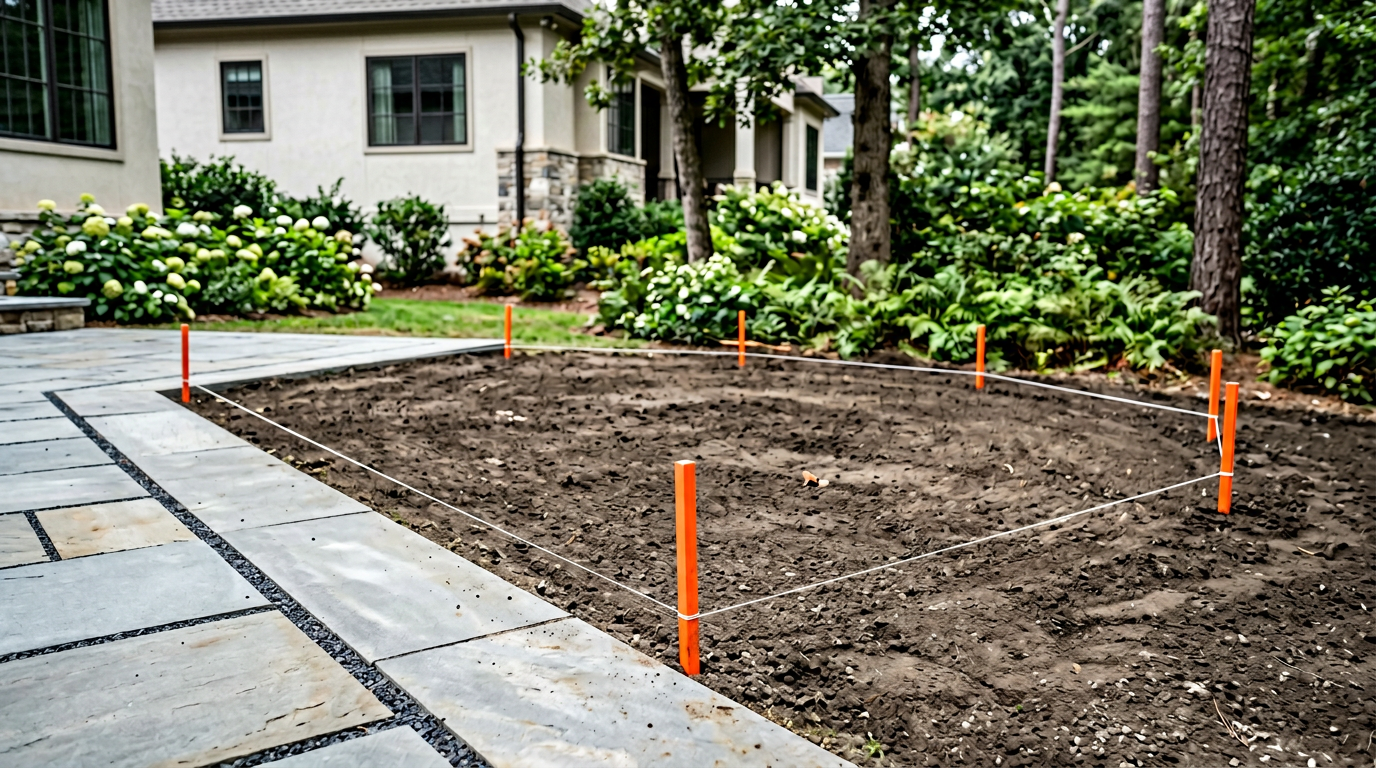
Submission packets include plan north, finished grade callouts, material identifiers tied to data sheets, and photo boards when the ARB asks for context views. If your community requires a pre-construction stakeout, we schedule it before gas rough so you are not paying to relocate a line after stone is stacked.
Short-term rental properties on Folly, IOP, or downtown often carry noise and nuisance clauses that indirectly cap wood use — even when covenant text is vague. We read the full declaration stack so your feature survives a board turnover, not just today's friendly reviewer.
The cheapest fire feature is the one approved on the first pass
The most expensive is the one you tear out because the ARB never signed the fuel type you installed — or because the gas inspector red-tagged the line layout. We front-load those conversations.
Charleston County Gas Line Permitting & Inspection
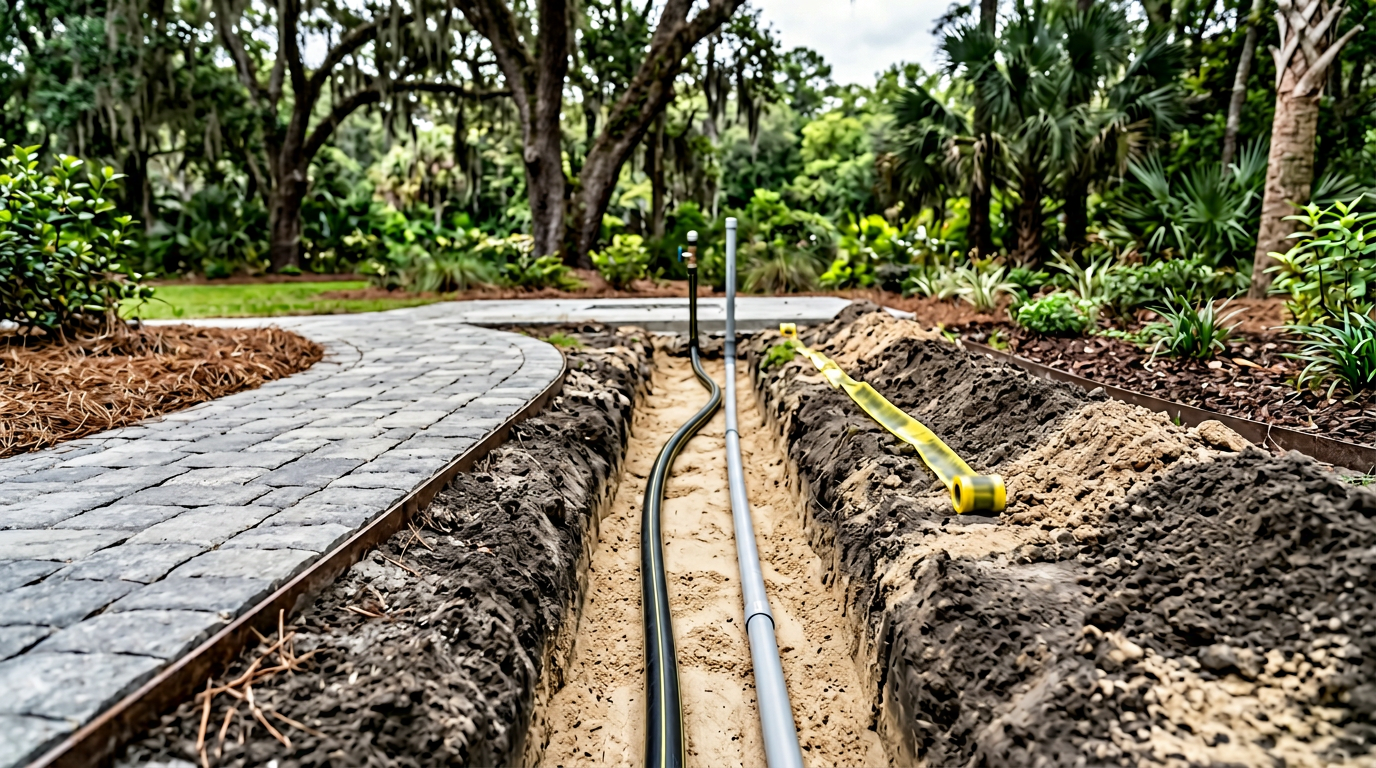
Gas features mean pressure, leak testing, and accessible shutoffs — not just a flex line tucked behind stone. DCM Outdoor coordinates licensed gas fitters, trenching, valve placement, and inspection scheduling so you are not waiting on a cold call-back to turn the key.
When your scope needs electrical for ignition, fan assist, or lighting integration, we align rough-in with the masonry schedule so inspection windows stay clean.
For a permit-minded checklist written in homeowner language, read Charleston County fire pit permits & HOA rules on our cost guide — it covers typical inspection sequencing and why rough gas must stay visible until sign-off.
Cost Ranges and What's Included
Pricing follows footprint, stone selection, gas run length, and whether we are tying into existing utilities or bringing new capacity. Our quotes separate structure, veneer, burner system, gas line, and inspection so you can see where money actually goes — not a single mystery number.
Built-in gas fire pits commonly fall $4,500–$12,000 for DCM Outdoor masonry scopes; custom stone gas builds and large tables can exceed $15,000 when veneer square footage, long gas runs, or bench integration stack. Outdoor fireplaces often land $8,000–$35,000+ depending on chimney height, lintel steel, and appliance class.
Anchor pit budgets with fire pit cost in Charleston and fireplace scopes with outdoor fireplace cost in Charleston — then compare quotes line by line before you commit stone.
Gas vs Wood — What Works Where
Gas wins on speed and predictability; wood wins on flame aesthetics where allowed. The Lowcountry's humid nights and tight lots mean smoke management matters either way. Read gas vs wood fire pits in Charleston and fire pit vs fire table for layout and fuel-path tradeoffs — then we will align the fuel choice to your HOA file before you buy a single pallet of stone.
Natural gas simplifies life when the meter has capacity and the trench path is sane; propane fits remote lawn anchors but introduces pad, screening, and refill logistics. We model five-year fuel friction, not just day-one aesthetics — the right fuel is the one you will actually use when the breeze is finicky and the HOA message board is active.
Fire Pit vs Outdoor Fireplace for Your Yard
Pits encourage 360° seating and lower chimney visuals; fireplaces create a wall, block wind, and define rooms. The right answer depends on wind roses, view corridors, and how you entertain. Compare layouts in depth via outdoor fireplace vs fire pit — then we will model clearances on your plan so cushions do not melt and ceilings stay safe.
Fireplaces concentrate heat on adjacent veneers and pergola Charleston SC columns; pits distribute it outward — different implications for synthetic decking, low vinyl rails, and pool enclosures. If you are torn, we will sketch both seating arcs on your survey before you commit stone.
Drainage & Base Prep — Why Fire Features Crack in Clay Soil
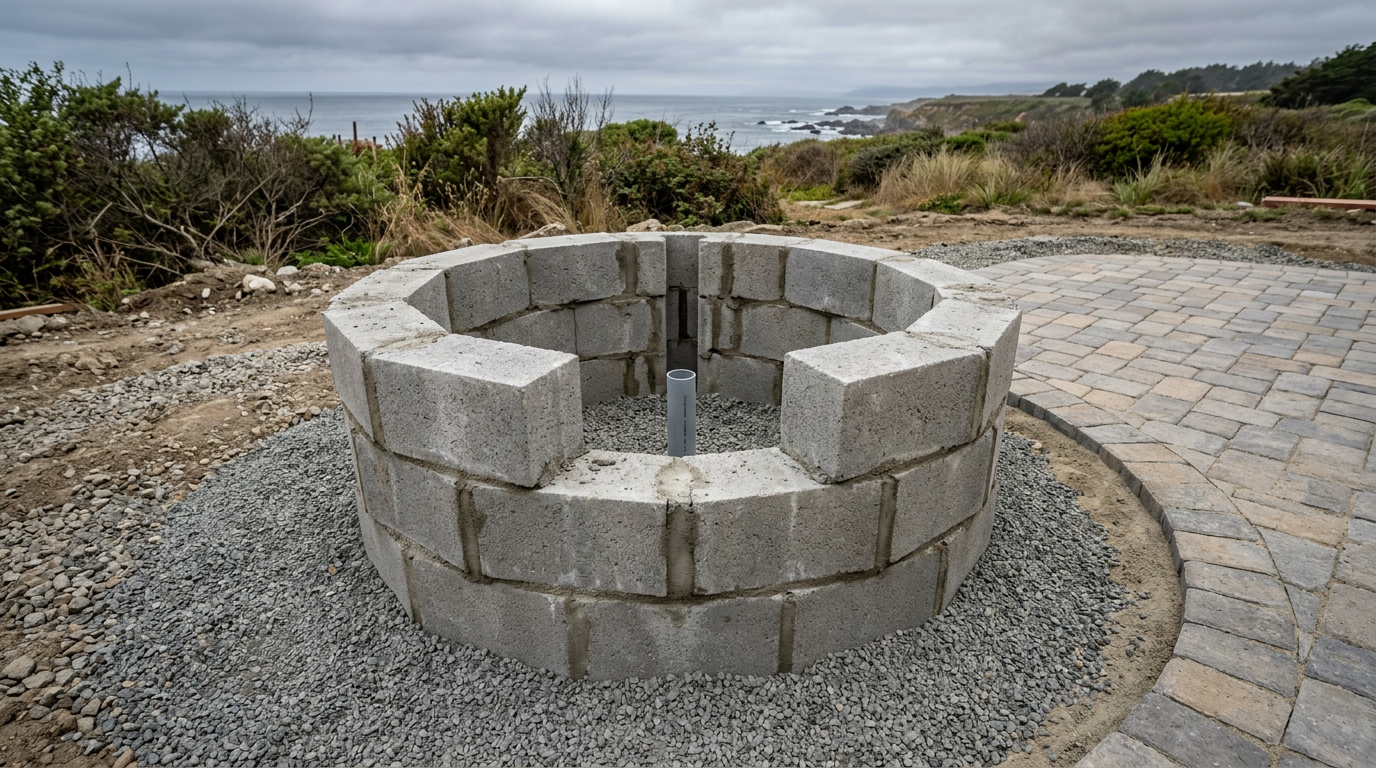
A heavy masonry ring on poorly drained clay traps moisture against the foundation of the pit or fireplace footing. Freeze-thaw is rare here — but cyclic wetting and sulfate-bearing soils still move poorly compacted bases. We detail aggregate sections, sleeves for gas lines, and positive pitch away from structures so your fire feature stays level after real storms, not just after the Instagram photo.
When pits sit inside an existing paver field, we cut and recompact like a mini patio repair — not a ring dropped on top of bedding sand alone. Fireplaces get footings sized for veneer weight plus chimney moment; we do not shrink-wrap a giant façade onto a sidewalk slab and call it structural.
Smoke Management & Charleston Wind Direction
Afternoon seabreezes and summer thunderstorms shift plumes faster than most homeowners expect. We position pits relative to prevailing flows, seat walls, and kitchen hoods so guests are not eating smoke. When wood is allowed, taller chimney elements or fire glass configurations can reduce nuisance complaints — a big deal on tight island lots.
For neighbor, HOA, and safety spacing framed as a planning checklist (the practical “fire pit safety” read for governed lots), see smoke, neighbors & HOAs in Charleston — then bring your survey to the site walk so we can validate seating arcs, not just flame photos.
Build Timeline + What We Handle for You
Small gas pits often complete in a handful of production days once gas and materials are released. Fireplaces track longer — footing cure, veneer leads, and inspection holds. We handle the HOA submission package so you are not chasing PDFs at night — most contractors hand you a form and disappear; we stay through sign-off.
Design + fuel decision locked early
So stone and steel agree with code paths.
Rough gas + electrical
Inspected before veneer closes access.
Masonry & finish
With documented clearances and drainage.
Typical sequencing for a mid-size gas fire pit looks like this: Day 1–2 layout, rough trenching for gas and any conduit, footing or slab pour as designed; Day 3–4 block or CMU core, gas pressure test, initial inspection; Day 5+ stone veneer, burner set, controls, jointing, and final gas walkthrough with you. Fireplaces add chimney lifts, lintel settings, and sometimes additional footing cure time — we bake that into the written schedule instead of promising "two days" and borrowing the next three weekends.
When your project bundles with a new paver patio or outdoor kitchen, we line up gas roughs while bases are open — the cheapest moment to place sleeves is before finish stone locks you out.
What Experienced Buyers Look for Before the Stone Goes On
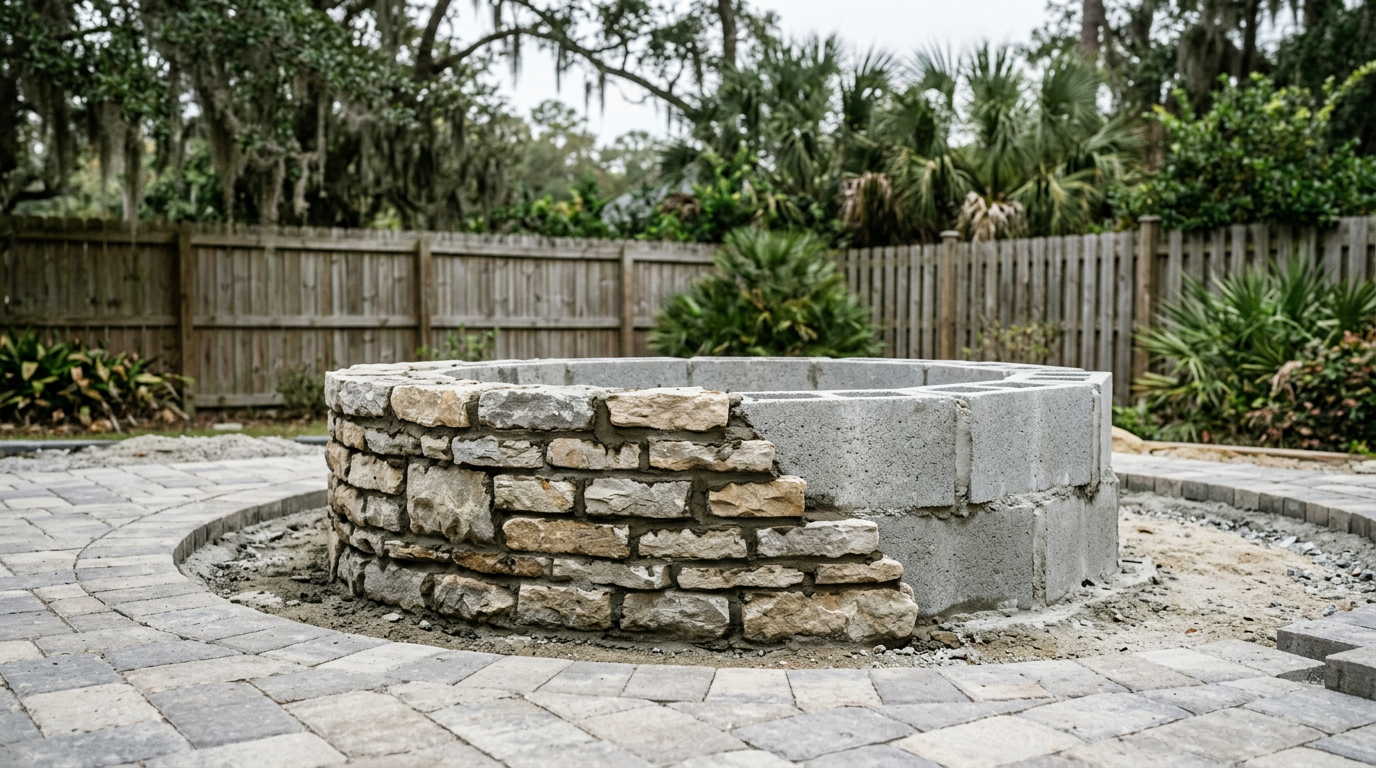
Finished fire photos do not tell you whether setbacks, utilities, and inspections were done in the right order. Serious homeowners and investor-clients want proof of discipline in the ground: layout that matches the plan set, trenches and sleeves you can photograph, a real masonry or engineered core — and gas rough that stays visible until the inspector is satisfied.
Ask any contractor you interview for date-stamped photos of these phases (or walk the site yourself). If the only pictures they show are catalog flames on a finished patio, you still do not know how your yard will be built.
Seat Walls, Cap Lighting & Fire Tables — Built Like the Pit, Not Bolted On
Most “upgrades” fail when they are treated as clip-on accessories. DCM Outdoor details seat walls that share footings or reinforcement with the pit shell, thermal movement joints at long runs, and low-voltage chases sized for future step lights — so you are not surface-mounting plastic channel six months later.
Fire tables get the same drainage discipline as ground-level pits: weep paths, burner access doors you can actually open, and stone caps that shed water away from controls. If you want a wide coping for plates and glasses, we engineer cantilever support instead of letting caps crack at the corners.
Water features and fire can share a wall when planned early — shared gas/electrical trenches, coordinated sound masking, and one ARB narrative instead of two competing submissions.
Lighting designers love grazers on seat walls; we leave conduit and junction access points that survive mortar caps — so your electrician is not grinding stone the week before a party.
The DCM Outdoor on-time completion guarantee
Every DCM Outdoor contract includes a specific completion date. If we miss that date without a documented cause — weather events, permit delays outside our control, or changes you request — you receive financial compensation. The terms are in the contract before you sign.
Charleston fire pit & outdoor fireplace reviews
See how clients describe gas coordination, HOA first-pass approvals, and drainage discipline — then read smoke, neighbors & HOAs in Charleston before you commit to a fuel type.
Fire Pit & Fireplace Questions We Hear Every Week
Do I need a permit for a gas fire pit? Often yes for permanent gas lines and sometimes for masonry footings — jurisdiction-dependent. We confirm before mobilization.
Can I convert wood to gas later? Sometimes — but burner systems, venting, and clearances differ. Designing for the fuel you actually want avoids a second stone tear-out.
Will my HOA reject a wood fire? Frequently in East Cooper planned communities. We help you pick a compliant fuel path before you invest in stone.
How close can a pit be to my house? Manufacturer listings and adopted fuel gas codes drive that number — not a guess from the mason. We document clearances on plan before pour day.
Do you handle propane tanks? Yes — including pad, distance to openings, regulator height, and screening strategies when ARBs care about visibility.
Ready for a Fire Pit or Outdoor Fireplace That Passes the First Time?
Free on-site consultation — we will map fuel, drainage, and HOA requirements before you commit.
Schedule a Free Estimate →Charleston outdoor living services