Outdoor lighting designed and installed as part of complete Charleston outdoor living projects — including paver patios, outdoor kitchens, pergolas and landscaping — so conduit, zones and transformer capacity are planned before hardscape closes.
Not a Standalone Lighting Shop — Lighting Built Into the Backyard
Specialty lighting companies focus on fixtures and service alone. DCM Outdoor designs outdoor lighting as part of the same outdoor living plan as your paver patio, outdoor kitchen, pergola, and planting — so the night environment matches the daytime design.
That is the advantage on renovation and new outdoor rooms: conduit under hardscape, kitchen task lighting and pergola lighting planned together, transformer capacity sized for the full project, and less disruption than cutting finished work later. If you only need a lighting add-on to an existing yard, we still design for Lowcountry trees, humidity, and coastal hardware — with clear disclosure of who performs any regulated electrical work.
Project photography
Charleston Outdoor Lighting Gallery
Path, canopy, and outdoor-room lighting photography. We are expanding this gallery with matched day-and-night pairs from the same camera position, fixture close-ups, and transformer / conduit progress shots as each project is documented.
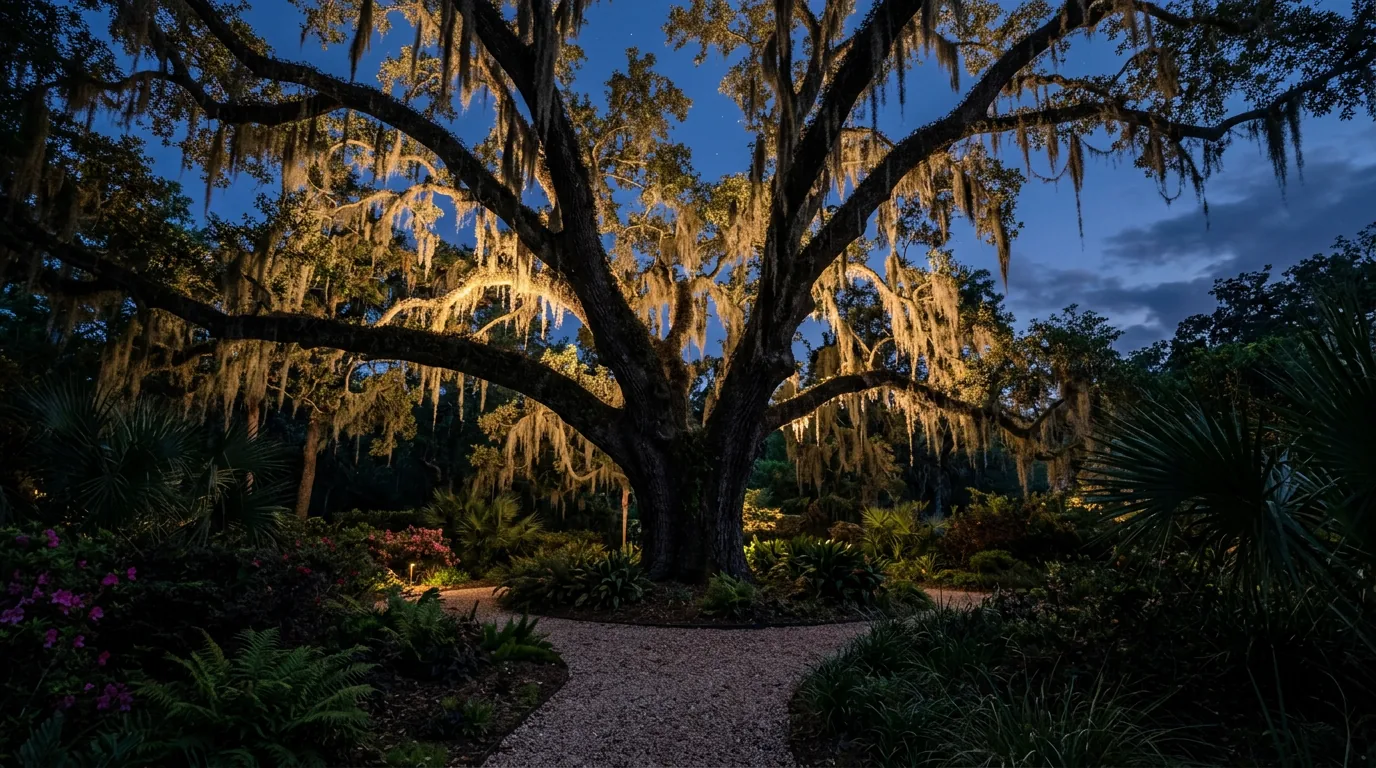
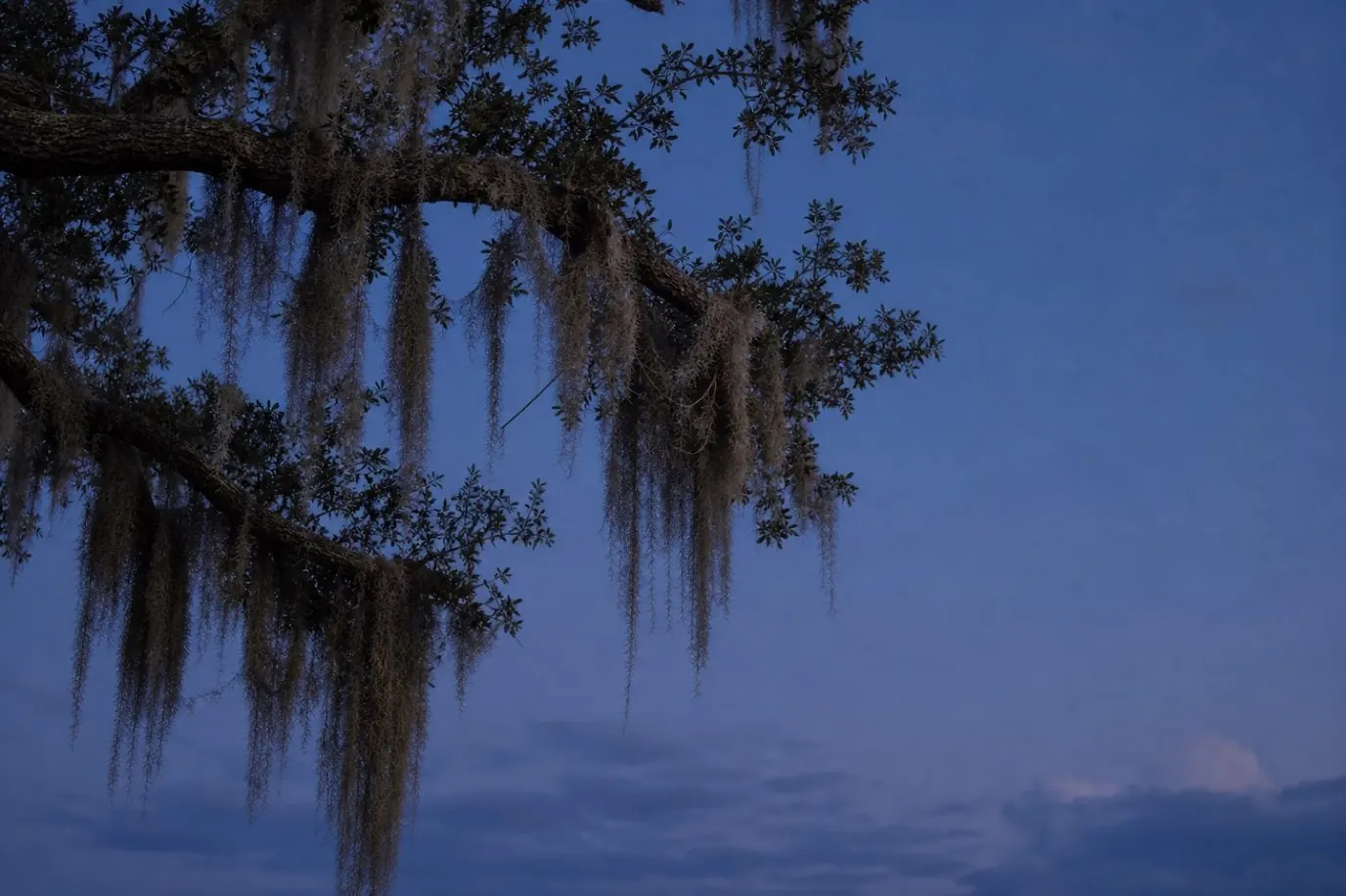
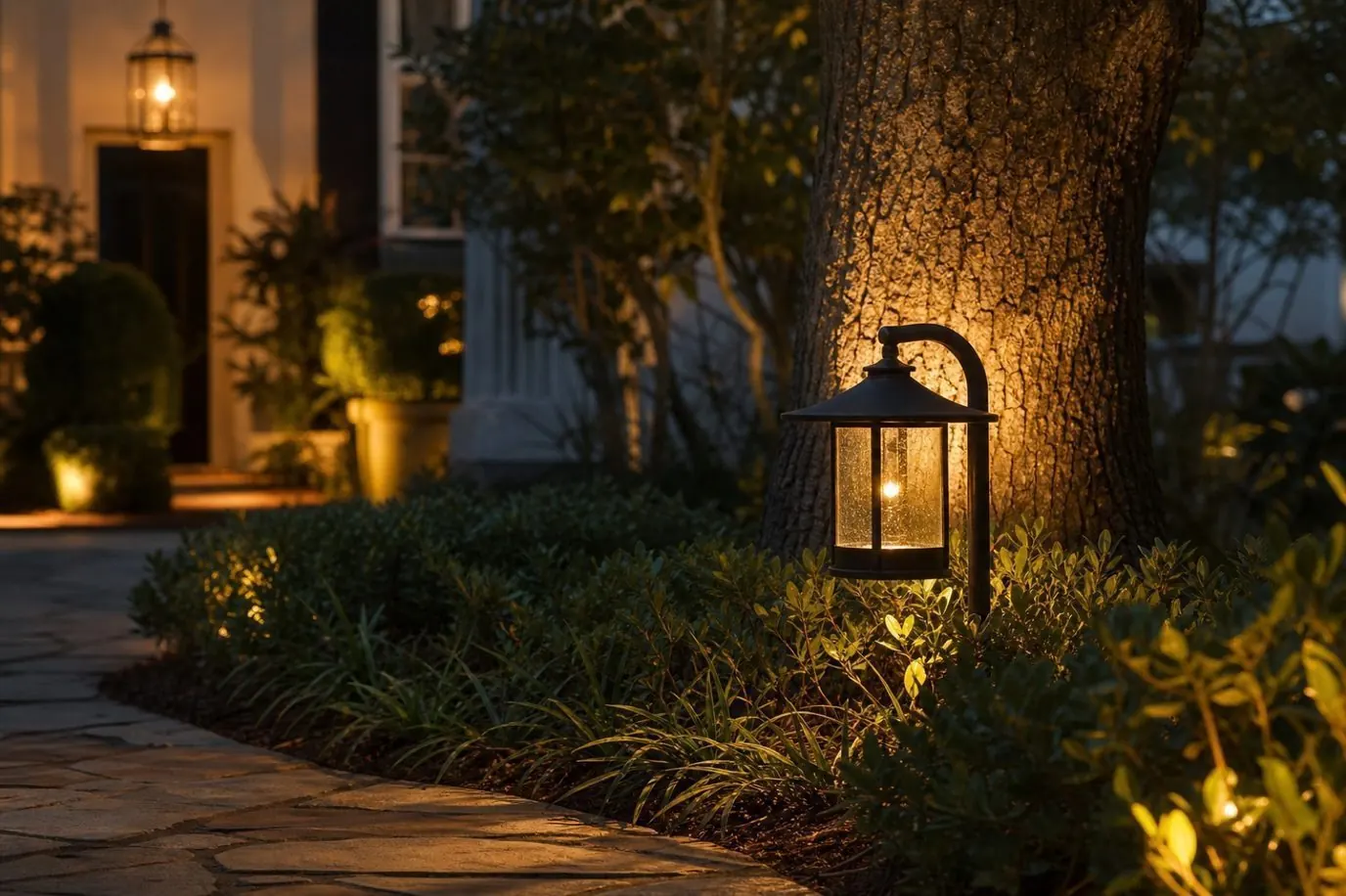
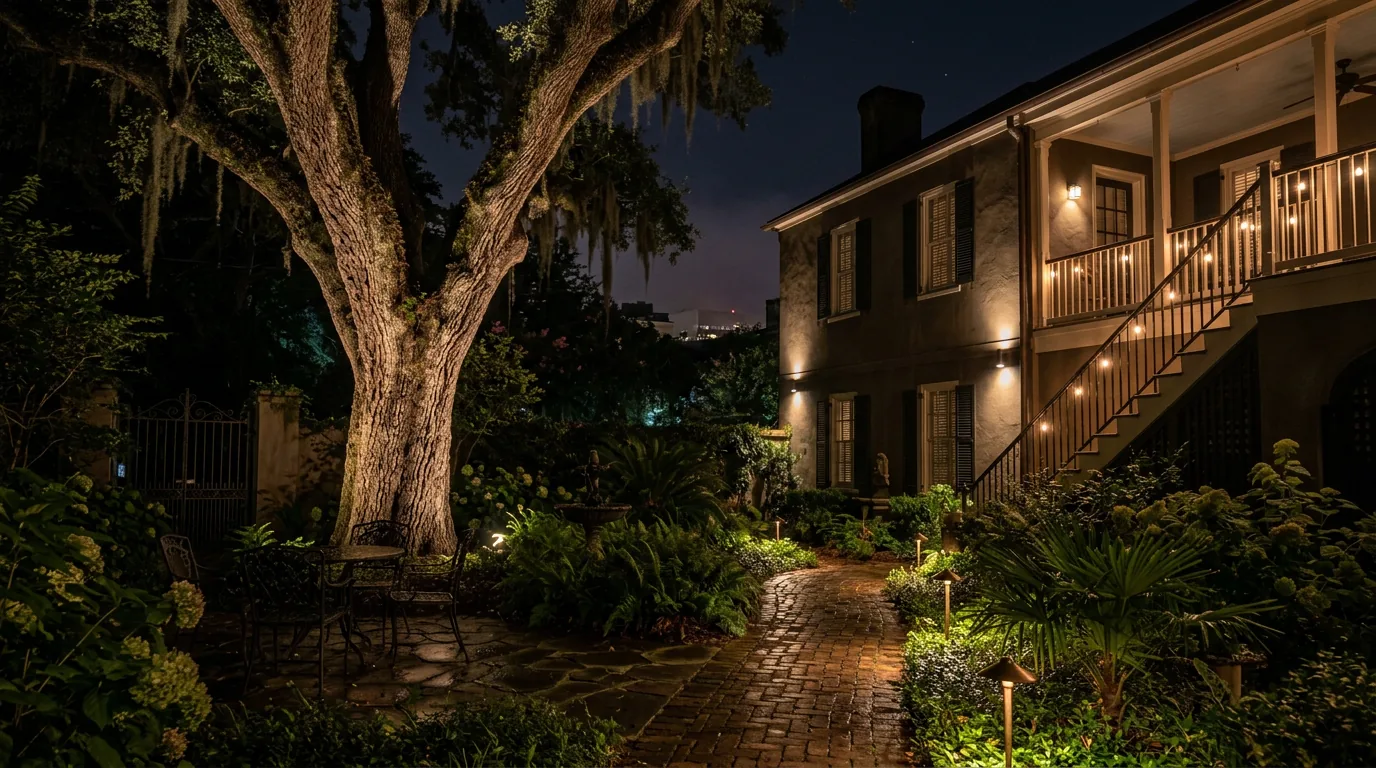
Evening landscape lighting across outdoor living zones.Canopy wash on Lowcountry oaks and moss.Fixture and aiming detail at grade.Patio and path zones planned as one night layout.
The most important lighting decision is often whether conduit runs beneath hardscape during installation or after. A patio or driveway installed without planned paths makes concealed lighting harder and more disruptive later. When DCM Outdoor is building the outdoor living scope, we plan lighting conduit to anticipated fixture locations before the first paver is set.
Kitchen task lighting, dining ambient zones, and pergola fan or beam lights should share one control plan and transformer sizing story — not three afterthoughts. That is how DCM competes with lighting-only firms on full backyard renovations: less tearing up finished work, cleaner aesthetics, and one schedule.
Lighting zones
How We Layer Lighting on Lowcountry Properties
Entry and approach: Path and step lighting at grade changes, with a focused accent at the entry when appropriate
Patio and outdoor living: Separate control for cooking/task areas and seating ambient
Specimen trees and planting: Uplights for live oaks and specimen plants; soft edge wash for beds
Water and pools: Fixtures rated for the environment; salt-appropriate hardware when needed
Warm white around 2700K is our usual residential landscape default so nights feel ambient rather than commercial. About 3000K can suit outdoor kitchen task zones. Cooler temperatures are rarely the right choice for Lowcountry residential landscapes.
Live oaks
Live Oak Canopy Uplighting
A mature live oak with carefully aimed ground-level uplights creates an aerial landscape after dark that no built element can replace. We typically wash the canopy rather than spotlight individual branches, using warm white so moss and bark read naturally — not institutional cool white.
Johns Island
Outdoor lights for a Johns Island patio
Patio lighting on Johns Island uses the same design-build lighting process as the rest of Charleston — conduit planned with the paver patio, warm-white zones, and live-oak canopy wash — then adjusted for how Johns Island lots actually work.
The Johns Island location page already notes larger lots, mature oaks, and properties on well and septic where electrical capacity can affect lighting and appliance loads. We assess that at the start of a lighting or patio scope, not after the hardscape closes. Low-voltage landscape lighting is the usual patio layer; line-voltage work, when required, is coordinated with a licensed electrical partner under South Carolina law.
Published lighting work on this site is the West Ashley pergola with integrated lighting. We have not published a Johns Island patio-lighting case study with day-and-night photography. Until that project is documented on our work, Johns Island patio lighting is specified from the same oak-canopy and conduit rules on this page, confirmed on site.
Coastal communities
Coastal Fixtures and Barrier-Island Lighting Rules
Near the coast, standard housings and hardware can corrode quickly. We specify coastal-appropriate fixtures and finishes when salt air exposure warrants it. Inland properties without that exposure can often use more cost-effective commercial-grade landscape fixtures.
On Kiawah Island, published beach guidance asks that beachfront-visible outdoor lighting be turned off from 9 p.m. to dawn from May through October during sea turtle nesting season. Specifying an amber wavelength alone may not establish compliance — operating schedule, aiming, and what is visible from the beach matter. DCM reviews the current community and town guidance for the property before finalizing a barrier-island lighting plan. See Town of Kiawah Island beach guidance.
Licensed electrical work
Who Performs Regulated Electrical Work
Under South Carolina law, electrical work above 50 volts must be performed by an appropriately licensed electrical contractor. DCM Outdoor coordinates a licensed electrical partner when line-voltage circuits, outdoor outlets, or permit filings require that scope. See South Carolina Code Title 40, Chapter 11.
Many landscape lighting systems operate as low-voltage designs. Permit needs still depend on the exact scope and local jurisdiction. We confirm requirements before work begins rather than assuming a blanket “no permit” rule for every yard.
Fixture and transformer warranties follow the manufacturer for the products selected. We provide product documentation at handover and explain care and aiming adjustments so the system stays serviceable.
Who you meet
Owner-Led Night Design Consultation
Donovan McDaniel
Owner and Project Lead, DCM Outdoor
Donovan leads outdoor living consultations — including how lighting layers with patio, kitchen, and shade scopes — and oversees construction sequencing so conduit and zones are not afterthoughts. Night aiming review is part of closing a lighting scope when the project includes DCM Outdoor lighting.
Published scopes from our work library. We are building toward at least three lighting case studies with location, scope, fixture count, products used, and matched day-and-night photographs — published only when assets and permissions are confirmed.
West Ashley · Pergola with integrated lighting · Planning range $10k–$18k · About 2 weeks
Custom wood pergola with low-voltage lighting conduit planned during install so the outdoor room works day and night — shade and lighting on one schedule.
Additional patio, kitchen, and landscape lighting case studies will appear here as day/night pairs are archived. Browse our work and lighting ideas meanwhile.
Reviews
Homeowner Feedback
Read verified feedback on our reviews page. After a lighting or outdoor living project, a natural Google review in your own words — especially if lighting changed how you use the yard at night — helps other Charleston homeowners evaluate real results.
A complete outdoor lighting system for a typical Charleston property — entry path, patio zones, and specimen tree uplighting — commonly runs $6,000–$25,000 installed depending on fixture count and transformer capacity. Installation concurrent with hardscape is usually more efficient than full retrofit. See also landscape lighting cost Charleston.
Frequently asked questions
Outdoor Lighting Questions — Charleston
How much does outdoor lighting cost in Charleston?
A complete outdoor lighting system for a typical Charleston property — entry path, patio zones, and specimen tree uplighting — runs $6,000–$25,000 installed depending on the number of fixtures and transformer capacity. New installation concurrent with hardscape work is meaningfully more cost-effective than retrofit.
Do outdoor lights require a permit in Charleston County?
Permit needs depend on the electrical scope and jurisdiction. Under South Carolina law, electrical work above 50 volts must be performed by an appropriately licensed electrical contractor. DCM Outdoor coordinates a licensed electrical partner when line-voltage work or permits require it, and confirms local requirements before work begins.
What color temperature is best for outdoor lighting?
DCM Outdoor typically specifies 2700K warm white for residential landscape lighting in the Lowcountry so nights feel ambient rather than commercial. About 3000K can suit outdoor kitchen task areas. Cooler temperatures are rarely recommended for residential landscape applications here.
Do you install outdoor lights for a Johns Island patio?
Yes. See outdoor lights for a Johns Island patio. We design patio zones with the hardscape and oak canopy, then confirm electrical capacity on site — especially on well-and-septic lots.
See how your property should look after dark
Book a night design consultation — we will walk zones for patio, kitchen, trees, and paths, and explain conduit timing if hardscape is part of your project.